Choosing the right platform is one of the most important decisions when building a website or online store. Many business owners compare Shopify vs WordPress to decide which one is better for their needs.
Both platforms are powerful, but they are designed for different purposes. Understanding the differences between Shopify vs WordPress can help you choose the best option for your business.
In this guide, we will compare Shopify and WordPress based on features, pricing, ease of use, SEO, and more.
1. Ease of Use:
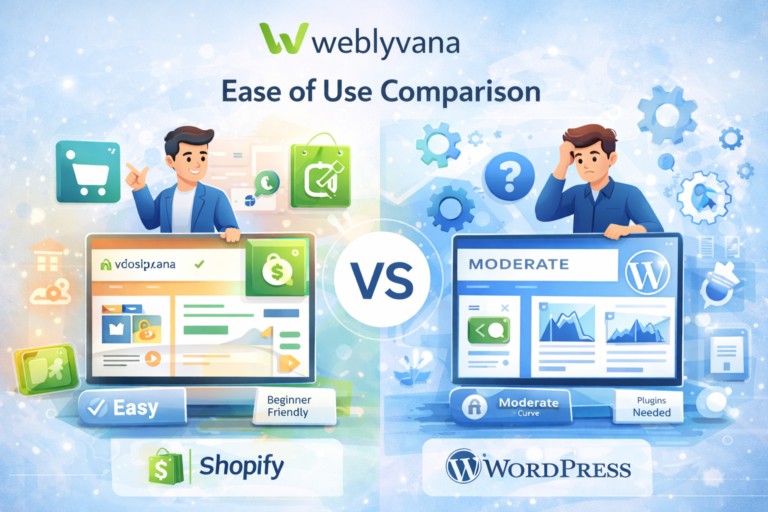
When comparing Shopify vs WordPress, ease of use is a major factor.
Shopify
Shopify is beginner-friendly and designed specifically for ecommerce. You don’t need technical skills to create an online store.
WordPress
WordPress has a learning curve, especially if you are new. However, it offers more flexibility and control.
👉 If you want simplicity, Shopify is easier.
👉 If you want flexibility, WordPress is better.
2. Pricing:
Pricing is another important factor in the Shopify vs WordPress comparison.
Shopify Costs
- Monthly subscription required
- Includes hosting and security
WordPress Costs
- Free software
- Requires hosting, domain, and plugins
WordPress can be cheaper initially, but costs can increase depending on your needs.
3. Design & Customization:
Design flexibility is where Shopify vs WordPress shows clear differences.
Shopify
- Limited themes
- Easy customization
WordPress
- Thousands of themes
- Full customization control
WordPress is the better choice for advanced design customization.
4. Ecommerce Features:
If you’re building an online store, this is crucial in Shopify vs WordPress.
Shopify
- Built specifically for ecommerce
- Payment gateways included
- Inventory management
WordPress (WooCommerce)
- Requires plugin setup
- Highly customizable ecommerce
Shopify is easier for ecommerce, while WordPress offers more flexibility.
5. SEO Capabilities:
SEO is critical when comparing Shopify vs WordPress.
Shopify
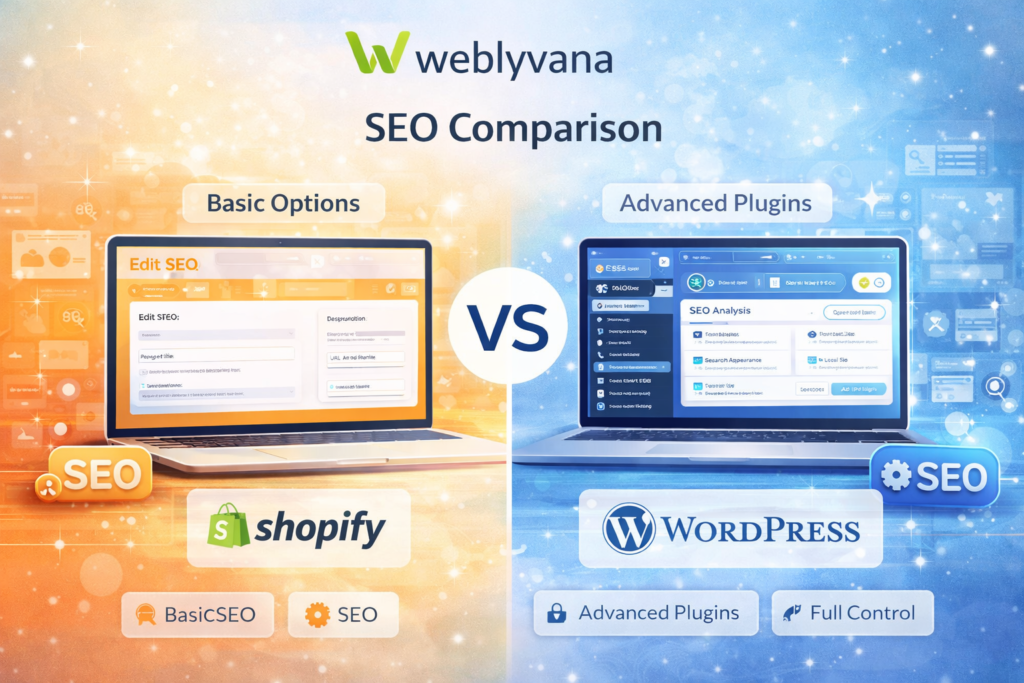
- Basic SEO features
- Limited control
WordPress
- Advanced SEO plugins
- Full control over optimization
WordPress is generally better for SEO.
6. Performance & Speed:
Website speed affects user experience and rankings.
Shopify
- Optimized hosting
- Fast performance
WordPress
- Depends on hosting and setup
Shopify is more consistent, but WordPress can be faster if optimized properly.
7. Security:
Security is essential for any website.
Shopify
- Built-in security
- SSL included
WordPress
- Requires security plugins
- Manual updates needed
Shopify is more secure by default.
8. Scalability:
As your business grows, your platform should scale.
Shopify
- Easy to scale
- Suitable for growing ecommerce stores
WordPress
- Highly scalable
- Better for content-heavy websites
Both platforms are scalable depending on how you use them.
Final Comparison: Shopify vs WordPress
| Feature | Shopify | WordPress |
|---|---|---|
| Ease of Use | Very Easy | Moderate |
| Pricing | Monthly | Flexible |
| Customization | Limited | High |
| SEO | Basic | Advanced |
| Ecommerce | Excellent | Flexible |
| Security | Strong | Depends |
Final Thoughts
Choosing between Shopify vs WordPress depends on your business goals.
- Choose Shopify if you want a simple, ready-to-use ecommerce platform
- Choose WordPress if you want full control and better SEO capabilities
Both platforms are powerful, but the right choice depends on your needs.
⭐ Need help choosing the right platform?
Weblyvana helps businesses build high-performing websites and ecommerce stores using the best platforms for their needs.
Whether you choose Shopify or WordPress, having the right setup can make a huge difference in your success.